In Ostroh, archaeologists discovered Trypillia culture materials and an 11th-century rampart
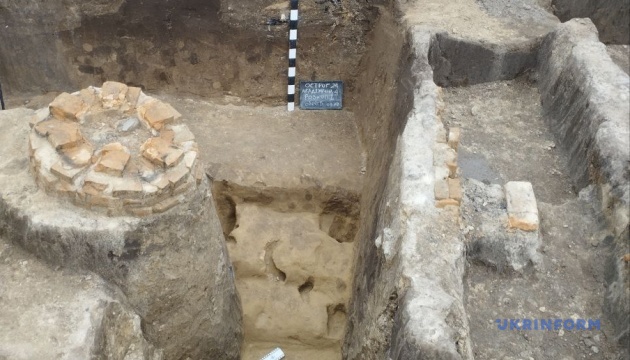
In the city of Ostroh, Rivne Oblast, where an archaeological expedition was working, an 11th-century rampart, Trypillia culture materials, a 10th-century oven were discovered, and a fragment of an underground structure was explored.
Pavlo Nechytailo, PhD in History and head of the Kamianets-Podilskyi Architectural and Archaeological Expedition of the state enterprise "Research Center 'Rescue Archaeological Service'" of the Institute of Archaeology of the NAS of Ukraine, told an Ukrinform correspondent about this.
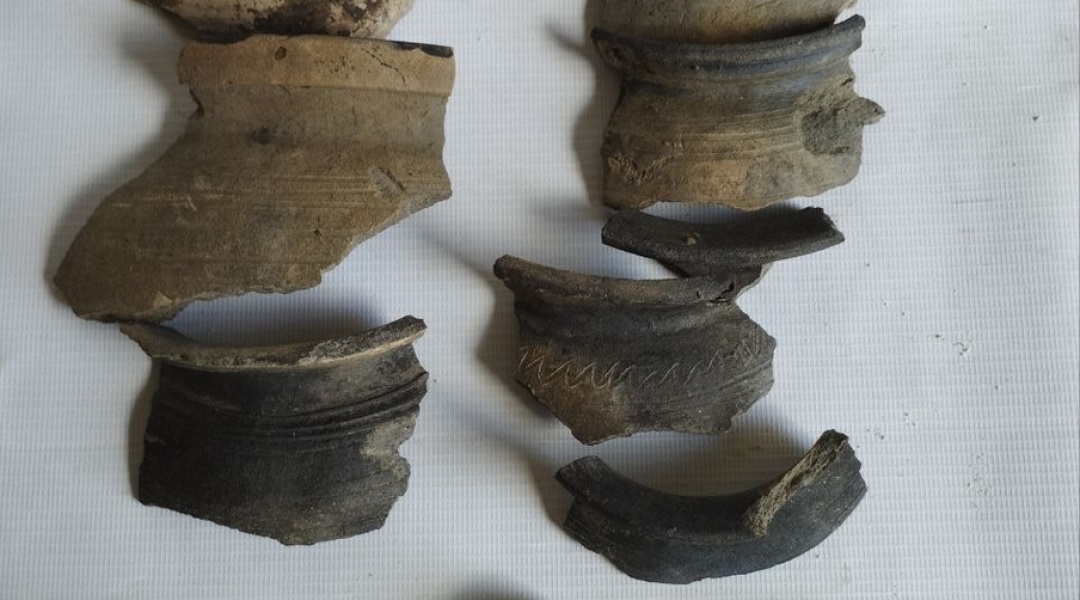
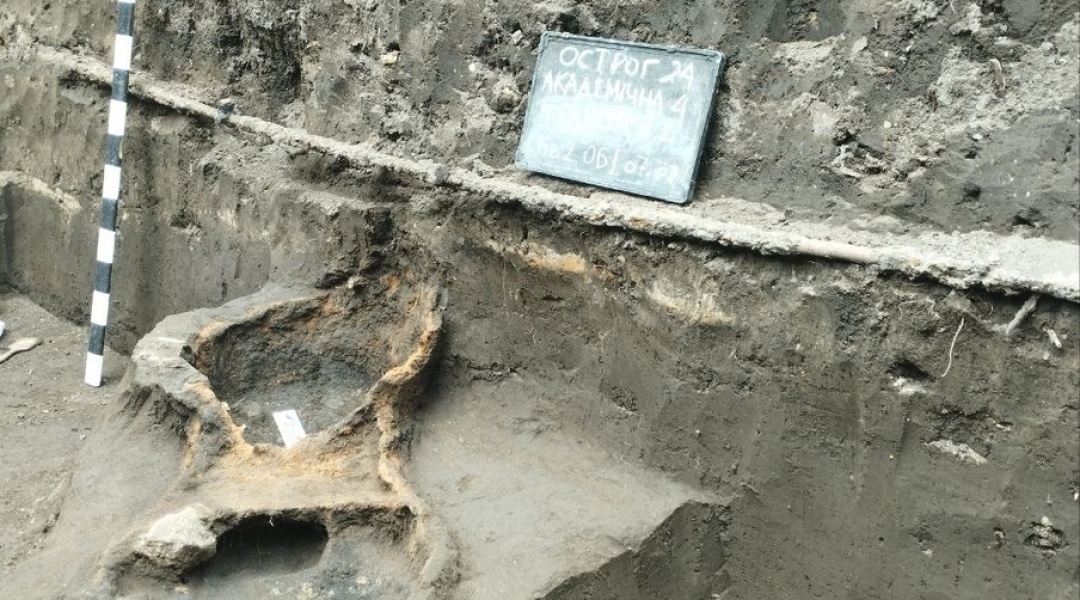
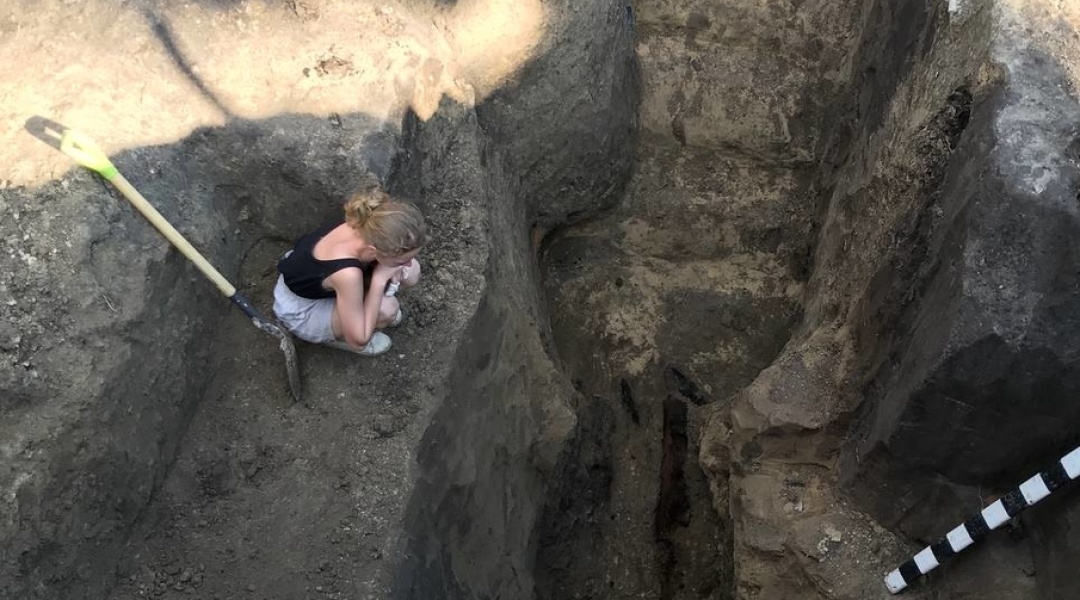
“In the main excavation trench, fragments of Ostroh's rampart built in the 11th century were uncovered. Under the rampart, an oven, pits, and pots from the 10th–11th centuries were found. In the lower layers of the excavation, there was a pit belonging to the Trypillia culture. According to preliminary conclusions by Dmytro Verteletskyi, PhD in History and specialist in the Eneolithic of Volhynia, the Trypillia culture materials could date back to 3600–3500 BCE. These include fragments of tableware, flint tools, and a saddle quern,” Nechytailo noted.
According to him, in the northeastern part of the site, ancient layers were destroyed by large-scale works carried out there in the 17th century. As experts established, a foundry specializing in smelting copper-containing alloy, possibly bronze, appeared on the site in the second half of the 17th century.
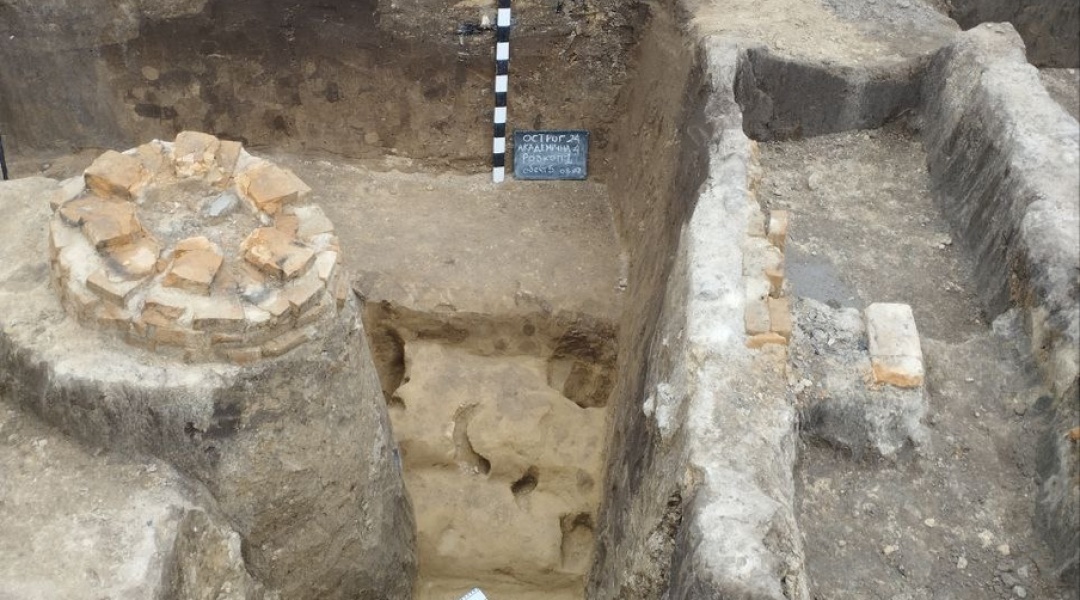
“We discovered fragments of a broken clay casting mold with a layer of baked non-ferrous metal inside. The working section of the melting furnace was laid out in a circle with a diameter of 1.1 m using massive bricks measuring 31x17x7 cm. Furthermore, while clearing the foundry, we noticed that it tilted suspiciously, and there was a patch underneath. As it turned out, it was the footprint of an underground structure. By the time the foundry was constructed, the entrance area of this structure had burned down and was filled with construction debris. We managed to explore a fragment of this underground space,” the archaeologist added.
That fragment of the underground structure is up to 6 m long. Its vault collapsed in ancient times, when the foundry was built on top. The underground area was completely carved directly into the clay, and its ceiling was a pointed Gothic vault. On the floor, a layer associated with the final phase of its operation was uncovered.
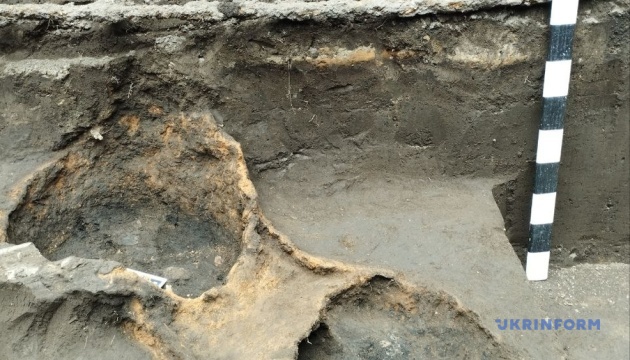
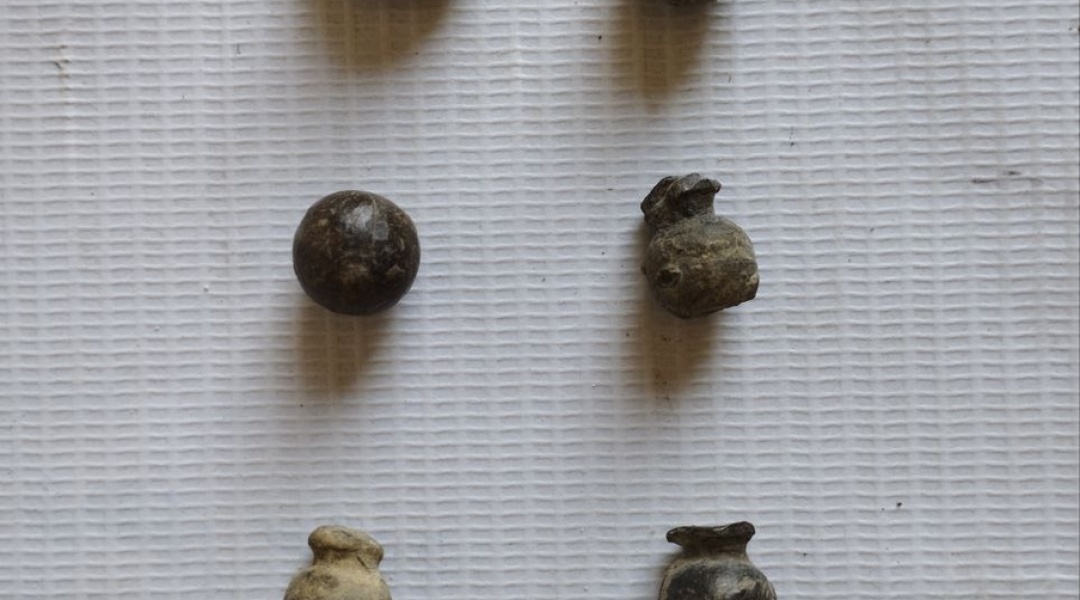
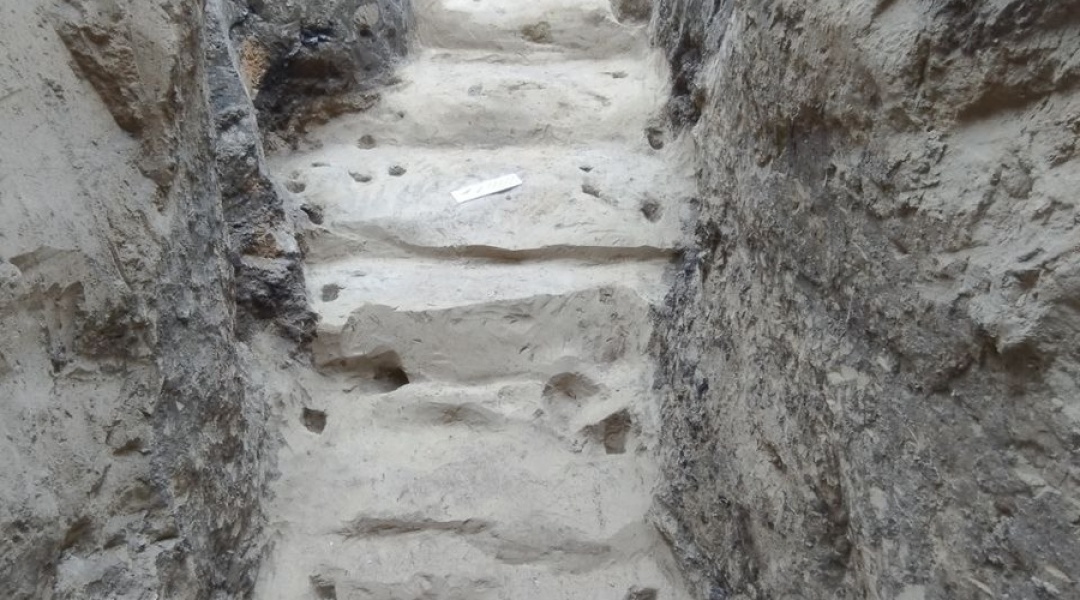
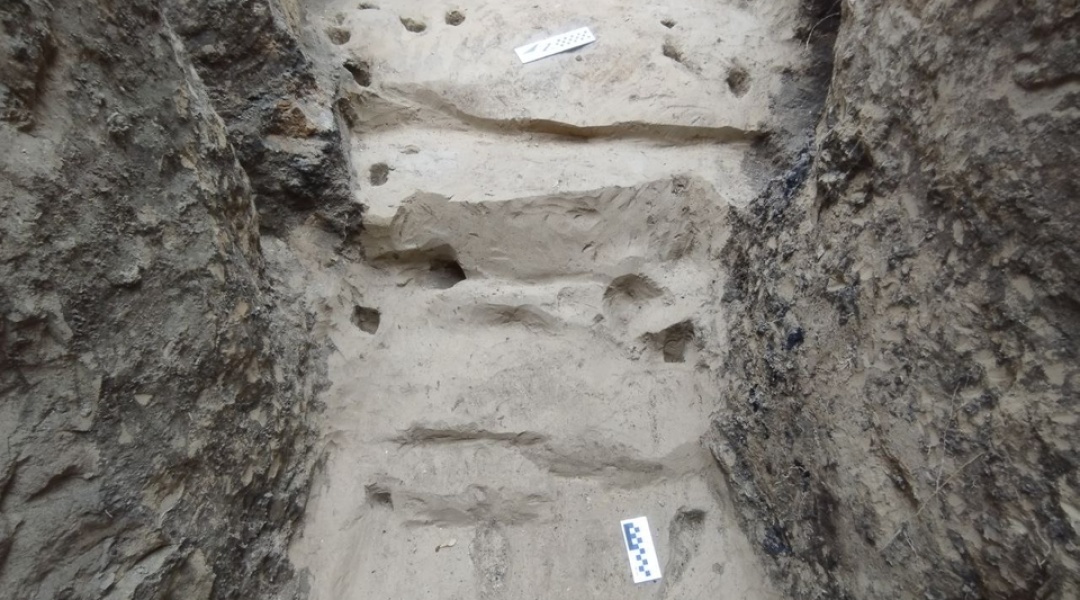
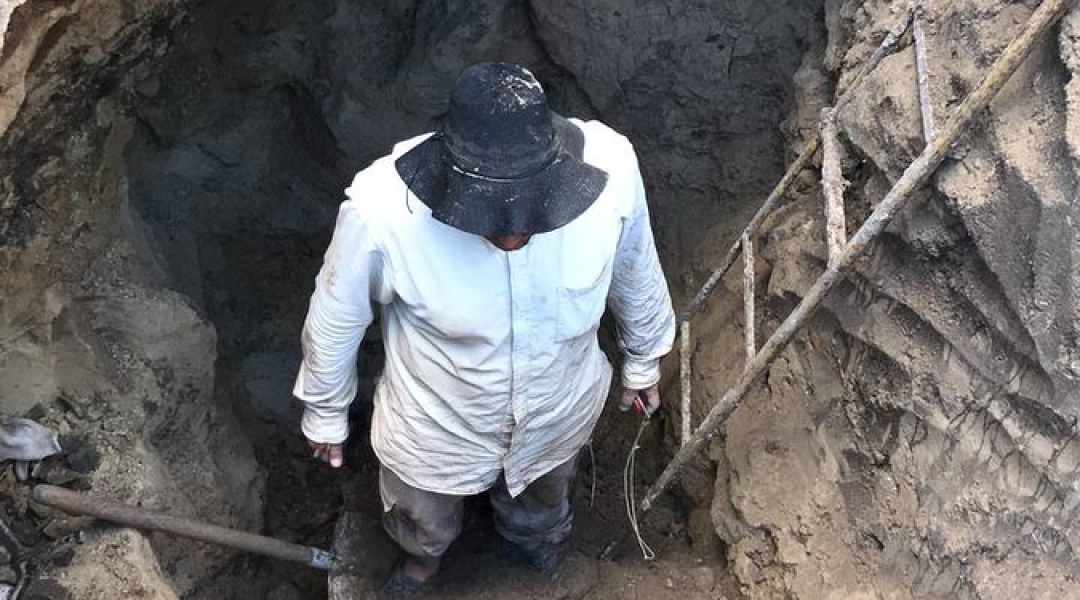
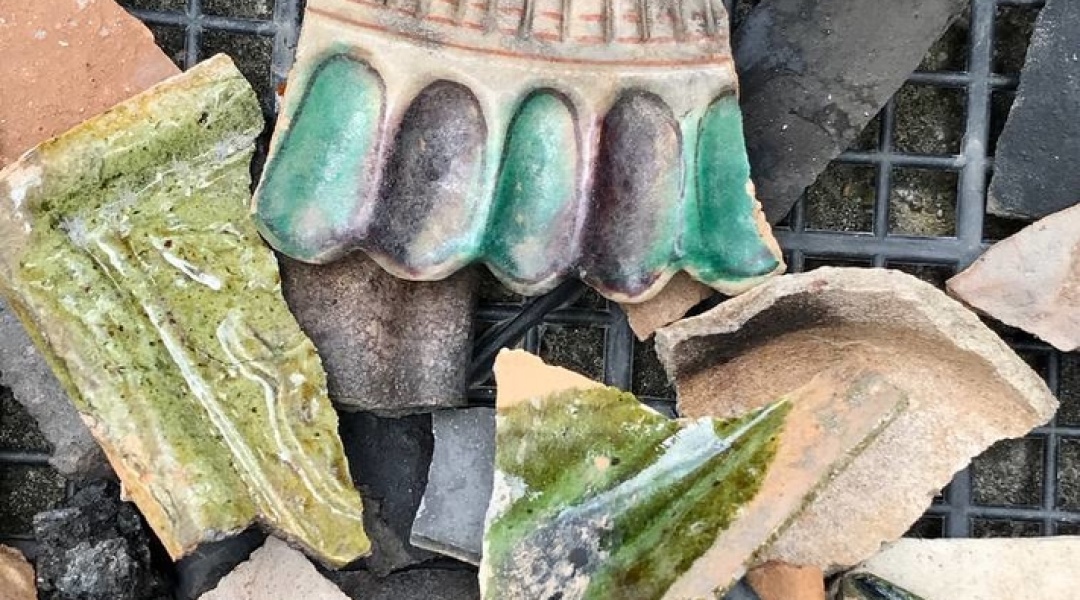
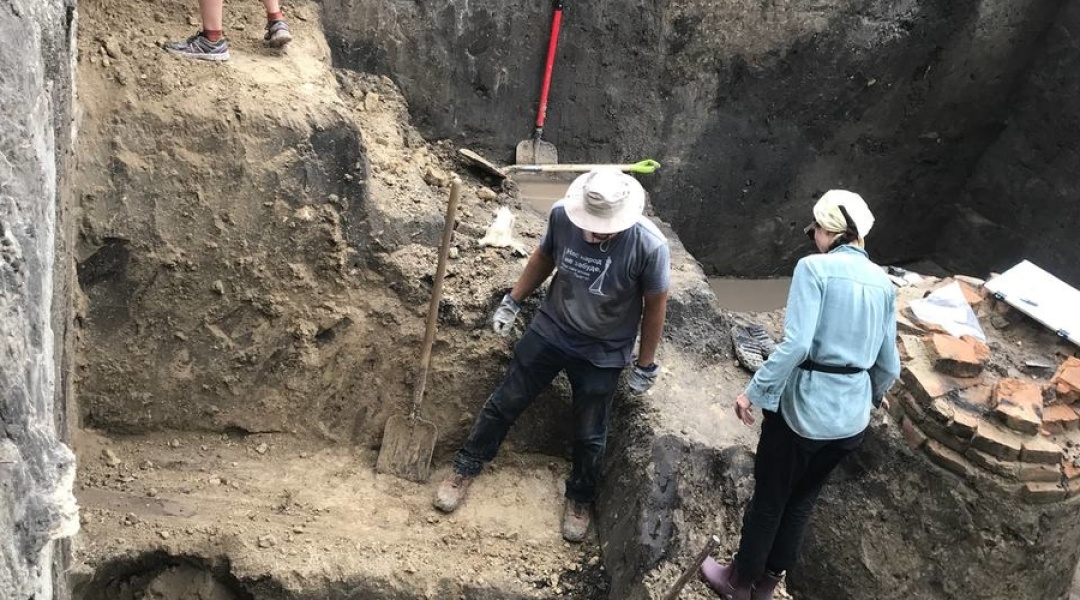
“Back then, as a result of a fire or military action, the wooden extension to the underground structure burned down and collapsed inward. There, at floor level, items from the first half of the 17th century were found: fragments of tiles, ceramic and glass vessels, nails, and a deformed lead bullet. Similar vaults and underground galleries are known in Ostroh; they were previously explored near the new academic building and the community center... This particular underground structure is interesting because it passed beneath Ostroh's defensive rampart. The structure looks like a gallery or tunnel. Next to it was an extension with wooden structures and six steps carved into the clay and lined with planks. This might be the remains of a secret passage that the city's garrison could use to stage counterattacks during a siege,” Nechytailo explained.
In addition, an interesting two-chamber oven from the 10th century was discovered in the trench. It also contained materials from the 10th–11th centuries, once again confirming the findings of previous researchers regarding the continuous existence of the city since that period.
The archaeologist also noted that structural fragments on top of the rampart were of great interest. In a small area of the dig, they managed to trace post holes from an ancient palisade (ostroh) that were baked solid due to a fire. These rampart structures with traces of a fire—possibly resulting from hostilities—also date back to the 11th century.
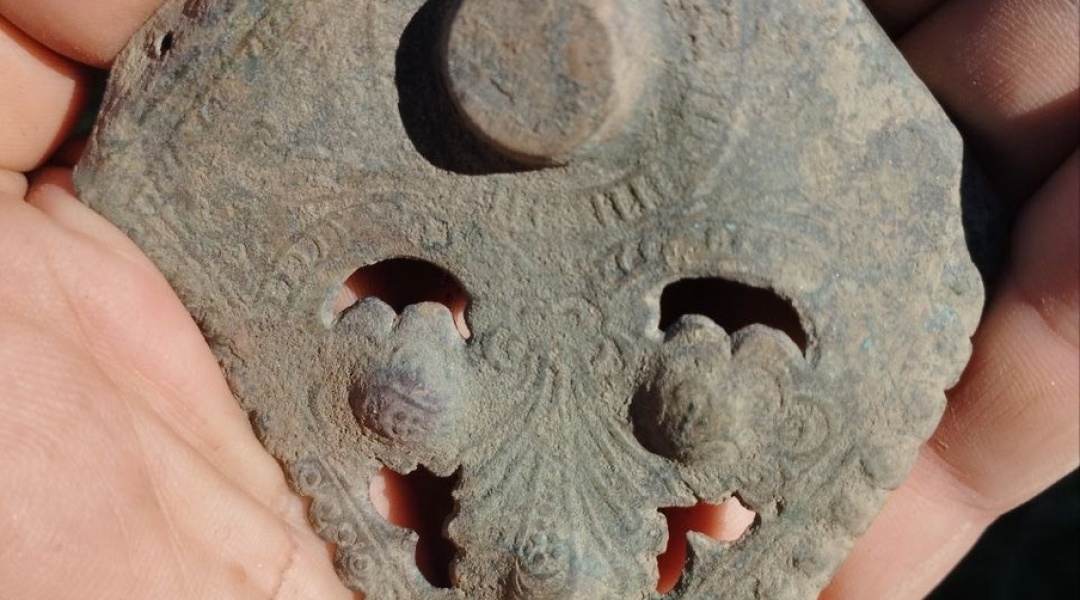
Among the material finds, besides ceramic vessels, they discovered a fragment of metal fitting with beautiful ornamentation, tools, personal items, bullets, and coins. Most artifacts date to the 17th century.
Nechytailo remarked that the possibility of preserving and displaying a fragment of the foundry through the efforts of the State Historical and Cultural Reserve of Ostroh is currently being considered.
Archaeological research at this site in Ostroh has been conducted since 2022 by the Right-Bank Comprehensive Archaeological Expedition of the Rescue Archaeological Service of Ukraine. This year, Pavlo Nechytailo served as the head of the excavations at the site.
As Ukrinform previously reported, in the city of Ostroh, Rivne Oblast, archaeologists discovered 10th-century pottery fragments, a 17th-century foundry, and an underground structure set to undergo further research.
Photos: Pavlo Nechytailo and Oleksandr Kovalchuk


Comments
Post a Comment